Are you designing a premium aluminum display or a stainless steel enclosure, only to find your magnetic latches fail completely during assembly? Specifying magnets without understanding the base metal ruins your product's user experience and your profit margins.
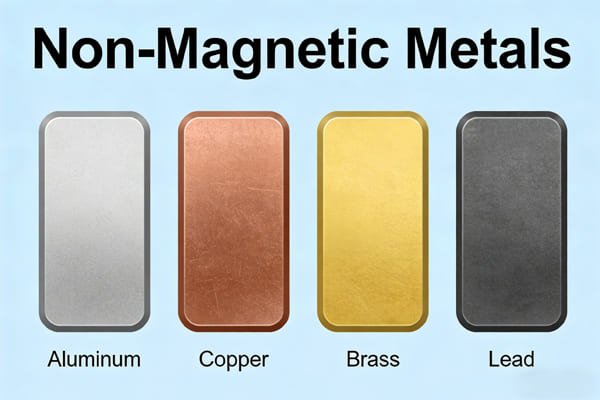
Quick Answer: Permanent magnets stick strongly to ferromagnetic metals1 like iron, steel, cobalt, and nickel. They generally will NOT stick to aluminum, copper, brass, lead, gold, silver, titanium, zinc, or most austenitic stainless steels (like 304 and 316). To use magnets on these non-magnetic surfaces, you must apply a thin steel backer or a magnetic-receptive film.
I see this expensive mistake constantly. A procurement manager buys the strongest NdFeB magnets2 available, assuming sheer power will make them stick to anything. It won't. You cannot outmuscle physics. Let’s stop guessing and look at the actual business logic and engineering behind magnetic and non-magnetic metals, and more importantly, how you can solve your assembly problems.
Metals Magnets Do and Do Not Stick To (The Cheat Sheet)
Not every metal plays nicely with magnets. To save you time, here is the ultimate engineering reference chart. You need to know exactly what you are working with before you place a purchase order.
| Material / Alloy | Phase / Category | Magnetic Behavior | Sticks to Magnets? | Engineering Notes |
|---|---|---|---|---|
| Iron / Low-Carbon Steel | Ferromagnetic | Extremely Strong | Yes | The standard baseline for maximum magnetic pull force. |
| Ferritic Stainless (430)3 | Ferromagnetic | Strong | Yes | Commonly used in household appliances and automotive trims. |
| Austenitic Stainless (304/316) | Paramagnetic | Very Weak / None | No | Heavy cold-working4 or welding can induce a very weak, unreliable magnetic pull. |
| Aluminum / Copper / Brass | Paramagnetic / Diamagnetic | None | No | Requires a steel striking plate or magnetic-receptive backing. |
| Titanium / Zinc / Lead | Paramagnetic / Diamagnetic | None | No | Requires a steel striking plate or magnetic-receptive backing. |
| Gold / Silver | Diamagnetic | None | No | Completely non-magnetic. |
| Nickel / Cobalt | Ferromagnetic | Strong | Yes | Pure nickel is magnetic, which is why Ni-Cu-Ni magnet coatings have a slight shielding effect. |
Why Is Stainless Steel So Confusing?
"But it's steel! Why won't the magnet hold?" I hear this from clients all the time. The word "steel" tricks people. The magnetic property of stainless steel depends entirely on its internal crystal structure (its phase), not just the fact that it contains iron.
Austenitic Stainless Steel (304 / 316)5: The addition of high amounts of nickel changes the alloy's crystal structure to austenite. This makes it non-magnetic. Magnets will drop right off a standard 304 sheet. However, if your factory heavily bends, stamps, or machines the 304 steel (cold-working), the stress can alter the microstructure locally, making it slightly magnetic. Never rely on this weak, inconsistent pull for your engineering designs.
Ferritic & Martensitic Stainless Steel (430 / 410): These alloys lack the high nickel content and retain a ferromagnetic crystal structure6. Your neodymium magnets7 will stick to them securely.
If you are auditing a factory and need to quickly check if they used 304 or 430 stainless steel, a simple magnet test is your easiest, fastest tool.
The Science: Why Don't Magnets Stick to Aluminum or Copper?
Let's keep the physics practical. Metals like iron, nickel, and cobalt are ferromagnetic. Their internal electron structures naturally form "magnetic domains8" that align perfectly when an external magnet gets close, creating a massive holding force.
Metals like aluminum, copper, gold, and brass are paramagnetic or diamagnetic. They simply lack the crystal structure to form these magnetic domains. Even if you buy the world's most powerful N55 Neodymium magnet, it will not create a direct, inherent physical bond with a pure aluminum sheet. The magnetic field passes right through it.
How to Make Non-Magnetic Surfaces Magnet-Friendly
You have a premium aluminum door panel, a glass display window, or a wooden cabinet, and you need a magnetic closure9. How do you fix this without redesigning the whole product? You must engineer a magnetic-receptive solution.
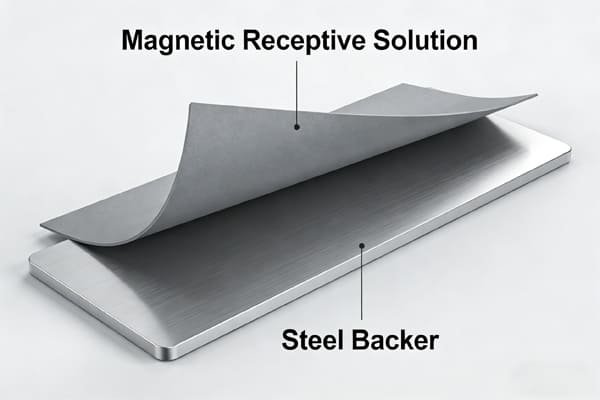
- Thin Steel Backers (Striking Plates)10: The most cost-effective and reliable method for B2B manufacturing. Use a thin, zinc-plated or nickel-plated steel disc with a 3M adhesive backing. Stick the steel plate to your aluminum or glass, and the magnet grabs the steel.
- Magnetic-Receptive Films11: Perfect for large-format retail displays and advertising. These are flexible rubber or plastic sheets heavily loaded with iron powder. You laminate them onto your non-magnetic wall, turning the entire area into a surface that magnets can grip.
- The "Air Gap" Warning (Luftspalt): When applying a steel backer, remember that the double-sided tape itself creates an air gap12. Even a tiny 0.5 mm gap of tape or paint drastically reduces the magnet's holding force. Always calculate your required pull force with the gap included, and consider sizing up your magnet or using multiple smaller magnets to compensate.
Frequently Asked Questions (FAQs)
Why won’t magnets stick to my stainless-steel fridge? Your fridge likely uses a high-end 304 austenitic stainless-steel outer shell, which is non-magnetic. Even if the inner frame is normal steel, the thick plastic, foam, and stainless shell create a massive air gap that blocks the magnetic field from reaching the ferromagnetic core.
Can strong neodymium magnets stick to aluminum? No. A stronger magnet will not change the fundamental physics of aluminum. To mount a magnet to aluminum, you must physically screw it in, glue it, or attach a steel striking plate to the aluminum surface first.
Does cold-working make 304 stainless steel magnetic? Yes. Intense bending, deep drawing, or stamping can cause a localized phase transformation in 304 stainless steel, inducing a weak magnetic pull. However, this is considered a side-effect, not a reliable engineering feature.
How do I test metals with strong magnets safely? Never let strong NdFeB magnets snap directly onto a thick steel block or snap together unguided. Sintered neodymium is brittle like ceramic; the extreme impact force will cause them to shatter, sending sharp magnetic shrapnel into your eyes. Always use heavy gloves and slide them carefully using non-magnetic plastic or wooden spacers.
Stop Guessing and Start Engineering
Do not leave your product's reliability to chance. Guessing which metal will hold your magnet leads to manufacturing delays and angry customers.
Whether you need high-temperature NdFeB magnets, custom magnetic-receptive backing plates, or expert advice on dealing with air gaps, MagniPro has the certified solution. With our ISO 9001 and ISO 2859 compliant quality control, we ensure every magnetic assembly works flawlessly in your specific environment.
Submit your scenario today—tell us your base material, thickness, environment, and target pull force—and our engineering team will provide a customized, cost-effective solution within 24 hours.
Understanding the properties of permanent magnets is crucial for effective design and assembly. ↩
Explore the powerful applications of NdFeB magnets in various industries. ↩
Discover the differences between ferritic and austenitic stainless steels for better material selection. ↩
Learn how cold-working can alter the magnetic properties of metals for better engineering. ↩
Learn about the unique properties of austenitic stainless steel and its implications for magnet use. ↩
Delve into the science of ferromagnetic structures to enhance your material choices. ↩
Discover the unique characteristics of neodymium magnets and their applications. ↩
Understanding magnetic domains is key to grasping how magnets interact with materials. ↩
Learn design strategies for effective magnetic closures in various applications. ↩
Find out how thin steel backers can enhance magnetic applications in your designs. ↩
Explore the versatility of magnetic-receptive films for creative display solutions. ↩
Understanding air gaps is essential for optimizing magnet performance in your designs. ↩