Are your cabinet doors constantly popping open or snapping shut too hard? Choosing the wrong magnet ruins the user experience. You need exact specifications to get it right.
For light cabinet doors weighing 1 to 3 kg, you only need 0.5 to 1.0 kg of pull force1 per magnet. Use multiple weaker magnets rather than one extremely strong magnet to ensure a smooth opening experience without damaging the door hinges over time.
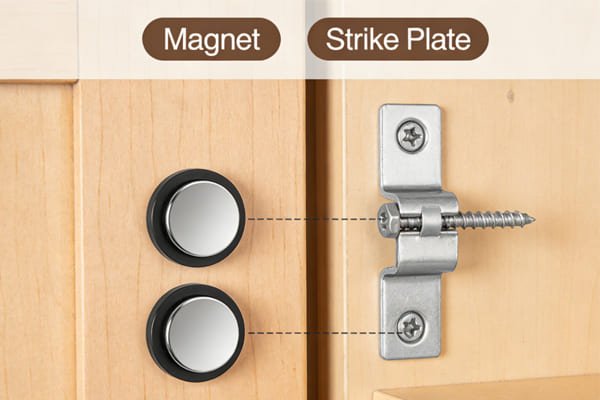
Many furniture makers just guess the magnet size. They buy the strongest neodymium magnet2 they can find, stick it on, and call it a day. Then, their customers complain that the cabinet requires two hands to open, or worse, the hinges tear out of the wood. I see this expensive mistake constantly. Let us stop guessing and look at the actual business logic and engineering behind perfect cabinet closures.
What is the difference between pull force and shear force3 in cabinet magnets?
You see a massive 10 kg pull force on a spec sheet. You install it vertically on a cabinet door, and it fails completely. Why did this happen?
The pull force measures the strength needed to pull a magnet straight off a surface. Shear force is the sliding resistance when a magnet is mounted vertically. In cabinet doors, the effective shear force is typically only about 20% of the stated pull force.
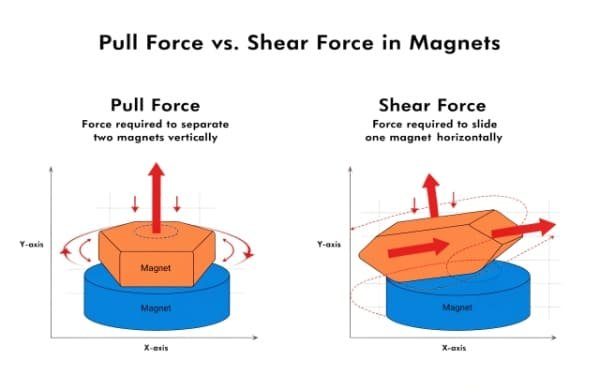
The Truth About Shear Force
When I talk to procurement managers, they always focus on the maximum pull force. We call this Haftkraft in German. But cabinet doors rarely open with a perfect perpendicular pull. Gravity and the door's own weight pull the magnet downward. This sliding motion introduces shear force.
| Force Type | Direction | Effective Strength |
|---|---|---|
| Pull Force | Straight pull (90 degrees) | 100% of rated capacity |
| Shear Force | Vertical sliding | Approx. 20% of rated capacity |
If a magnet claims 10 kg of pull force, it might only hold 2 kg before it slides. You must calculate your door's weight and add a generous safety margin4. For example, if your solid wood door weighs 2 kg, a magnet with a 2 kg pull force will fail immediately. You need a magnet with at least 10 kg of pull force to survive the shear stress. Alternatively, you can create a physical ledge in the wood for the magnet to sit on. This mechanical support takes the shear load off the magnet entirely. This simple trick allows you to use a smaller, cheaper magnet while keeping your profit margins high.
Which magnet types are best for DIY versus professional cabinet projects?
Not every cabinet needs a premium neodymium magnet2. Wasting money on over-engineered components kills your profit margins. You must match the material exactly to the job.
For professional heavy-duty cabinets5, use countersunk pot magnets6 for secure screw mounting. For lightweight DIY projects, flexible magnetic tapes7 or flat strip magnets are highly effective. They offer fast installation and keep your material costs extremely low.
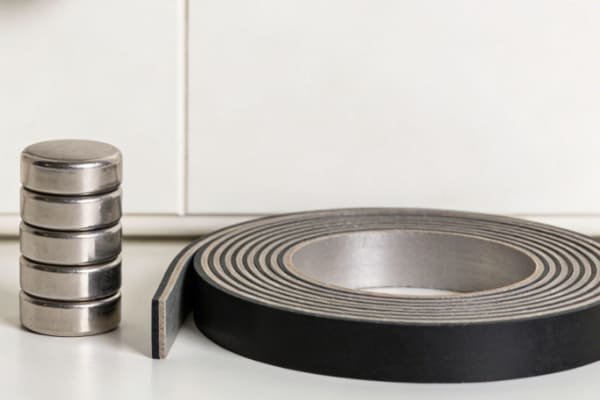
Matching Material to the Project
Let us break down your options. I started MagniPro because I saw too many buyers wasting money on the wrong materials. If you are building high-end kitchen cabinets or industrial enclosures, you need pot magnets. These feature a steel cup that focuses the magnetic field8 to the front. You secure them with a screw.
| Magnet Type | Best Use Case | Cost Level | Installation Method |
|---|---|---|---|
| Pot Magnet (Countersunk) | Heavy professional cabinets | Medium | Screwed directly into wood |
| Flexible Magnetic Tape | Light display cases | Low | Self-adhesive backing |
| Flat Strip Magnet | Medium-weight doors | Low | Adhesive or light screws |
When using magnetic tapes, always align opposite poles. Match the North pole of one strip to the South pole of the other. Never use two pot magnets facing each other as counterparts. The steel cup shields the magnetic field. They will repel each other or fail to grip properly. Use one pot magnet and a simple steel plate as the counterpart. This approach saves money and prevents assembly errors.
How does the air gap9 affect your cabinet door magnet's strength?
You bought the right magnet, but the door still feels loose after you paint the cabinet. The hidden enemy ruining your product is the air gap.
An air gap is any physical space between the magnet and the striking plate. This includes paint, wood veneer10, or dust. Even a tiny 0.5 mm layer of paint can reduce the magnet's holding force by over 50%.
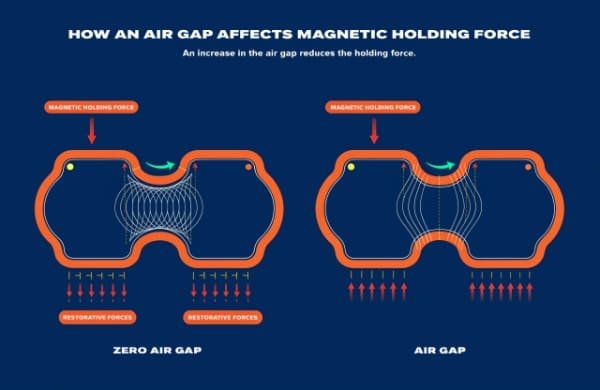
The Danger of Hidden Gaps
An air gap is the silent killer of magnetic force. In real furniture manufacturing, you almost never have a raw magnet touching raw steel. You have wood veneer or thick lacquer between the magnet and the metal plate. I constantly remind my clients to account for this.
| Gap Material | Typical Thickness | Impact on Magnetic Force |
|---|---|---|
| Standard Paint | 0.2 mm | Low reduction |
| Thick Lacquer | 0.5 mm | Reduces force by over 50% |
| Wood Veneer | 1.0 mm | Severe reduction |
The magnetic field8 drops incredibly fast as distance increases. A magnet that holds 5 kg on direct contact might only hold 1.5 kg through cabinet paint. To solve this problem, do not just buy a huge magnet. Increase the number of smaller magnets. Using three smaller magnets distributes the holding force evenly. It prevents the wood from warping over time and provides a much smoother feel when the customer pulls the handle.
How should you position the striking plates11 and magnet poles12?
Placement is everything in assembly. If you install the magnet in the wrong spot, you will either break the hinge or the door will never close flush.
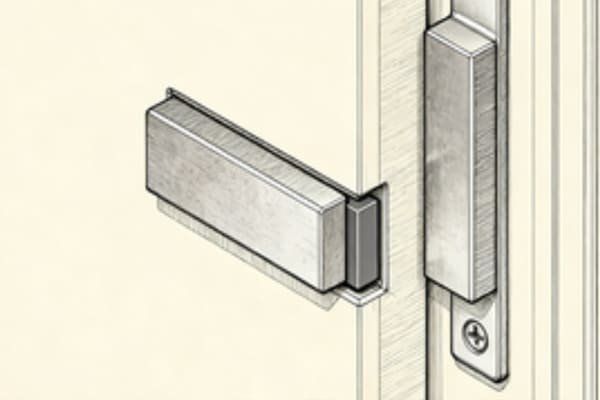
Always install magnets as far away from the door hinge as possible to maximize leverage. Use thin, plain steel discs as striking plates. If you use magnetic strips, ensure the poles align perfectly to prevent weak spots.
Maximizing Leverage and Alignment
The basic rule of leverage applies directly to cabinet design. The door handle is far from the hinge, so the magnet must also be far from the hinge. If you put the magnet too close to the hinge, the user will have to pull incredibly hard.
| Component | Placement Rule | Why It Matters |
|---|---|---|
| Magnet | Far from hinge | Prevents massive stress on screws |
| Striking Plate | Exactly aligned with magnet center | Prevents drastic loss of holding force |
| Steel Disc | 1.5 mm minimum thickness | Stops magnetic field8 from passing through |
When choosing a striking plate, a plain steel disc is perfect. Do not overthink this part. It just needs to be thick enough so the magnetic field does not pass completely through it. If you do a hidden installation where the magnet is buried behind the wood, make sure the striking plate is perfectly aligned. Precision in your factory saves you from angry customer emails and expensive returns later.
Conclusion
Choosing cabinet magnets requires calculating pull versus shear force3, managing air gaps, and using the correct striking plates. Stop guessing and engineer your closures for a flawless customer experience13.
Understanding pull force is crucial for selecting the right magnet, ensuring your cabinet doors function smoothly. ↩
Explore the benefits of neodymium magnets, known for their strength and reliability in various applications. ↩
Learn about shear force to avoid common installation mistakes that can lead to cabinet door failures. ↩
Calculating a safety margin helps prevent failures and ensures your cabinet doors operate smoothly. ↩
Discover the essential features of heavy-duty cabinets to ensure durability and functionality. ↩
Discover why countersunk pot magnets are ideal for heavy-duty cabinets and how they enhance stability. ↩
Find out how flexible magnetic tapes can simplify your DIY projects while keeping costs low. ↩
Understanding magnetic field strength is vital for selecting the right magnets for your cabinet doors. ↩
Understanding air gaps is essential for ensuring your magnets perform optimally in cabinet installations. ↩
Explore how different materials like wood veneer can significantly affect the holding force of magnets. ↩
Learn the importance of striking plate placement to maximize the effectiveness of your cabinet magnets. ↩
Proper alignment of magnet poles is key to preventing weak spots and ensuring a secure closure. ↩
Enhancing customer experience through proper magnet selection can lead to higher satisfaction and fewer returns. ↩