Your product is failing in the field from heat, even though the magnet's datasheet said it should be fine. This is a frustrating and costly problem that puts your reputation at risk.
Yes, temperature significantly weakens magnets1. Heat causes a magnet's internal magnetic domains to become misaligned, reducing its strength. This can be a temporary, reversible loss or a permanent, irreversible loss if a critical temperature is exceeded. Preventing failure requires looking beyond the datasheet and considering the magnet's grade, shape, and the entire system it operates in.
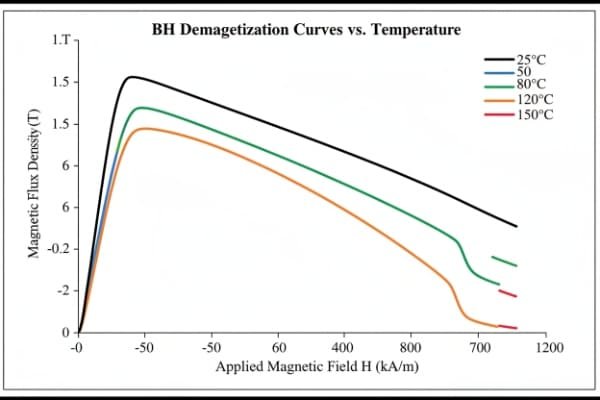
I've seen this scenario countless times. An engineer selects a magnet based on its room-temperature strength, only to have it fail in a hot motor or a device left in the sun. The truth is, most real-world magnet failure2s are not due to poor quality; they are application-related, caused by a misunderstanding of how heat, magnet shape, and the magnetic circuit interact.
This guide goes beyond simple temperature ratings. I will share the engineering insights3 I've learned from helping clients like Reza and Charalampos avoid these costly mistakes. We'll look at the why behind thermal demagnetization and give you a practical framework to choose the right magnet for your high-temperature application.
What’s the Difference Between Reversible and Irreversible Strength Loss?
Your magnet's performance drops when hot, but sometimes it recovers, and other times it doesn't. This unpredictability can make your design seem unreliable and is a major source of engineering headaches.
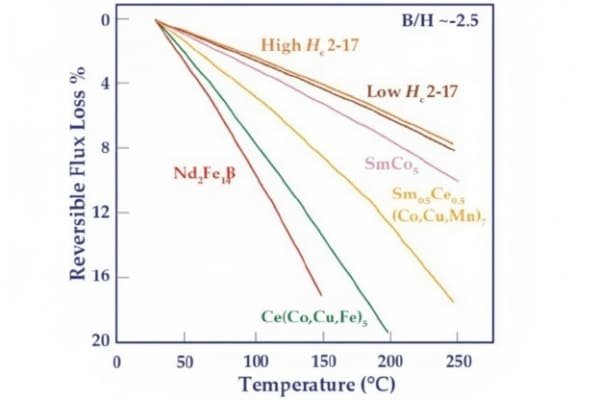
The key is understanding the three types of thermal loss. Reversible loss is a temporary dip in strength that recovers when the magnet cools. Irreversible loss4 is a permanent drop that occurs when the operating point falls below the "knee" of the BH curve but can be restored by remagnetizing. Permanent loss happens at the Curie Temperature5, where the material's structure changes and magnetism is lost forever [5][12][64].
From a Temporary Dip to Permanent Damage
When I explain this to clients, I use the analogy of a rubber band. A little stretch is fine, but stretch it too far, and it loses its snap.
| Type of Loss | Description | Analogy | Is it Recoverable? |
|---|---|---|---|
| Reversible Loss | A predictable, temporary drop in performance as temperature increases. The magnet's strength returns to its original value upon cooling [21][43][83]. This is defined by the magnet's Temperature Coefficient [1][49]. | Stretching a rubber band slightly. It returns to its original size when you let go. | Yes, automatically upon cooling. |
| Irreversible Loss | A partial, permanent demagnetization that happens when the magnet gets too hot for its grade and shape. The internal domains are knocked out of alignment [21][46][83]. | Stretching a rubber band so far that it becomes loose and doesn't fully snap back. | Yes, but only by remagnetizing the magnet with a powerful external field. |
| Permanent Loss | Occurs at the Curie Temperature5 (Tc), where the material's metallurgy changes. The magnet's ability to be magnetized is destroyed [5][12][13][75]. | Stretching the rubber band until it snaps. It's broken forever. | No, the magnet is permanently damaged. |
Most design failures I see are due to engineers not accounting for irreversible loss6s](https://en.wikipedia.org/wiki/Hysteresis)%%%FOOTNOTE_REF_4%%%. They see the 80°C rating and assume they are safe, but they aren't considering the whole picture.
Why Are Datasheet Temperature Ratings So Misleading?
You carefully chose a magnet with an 80°C temperature rating, but it's failing at just 70°C. You feel misled by the specs, and your project is now facing critical performance issues.
A magnet's temperature rating is only a guideline for a magnet in an ideal shape and circuit. The magnet's real-world heat resistance is determined by its Grade (Intrinsic Coercivity)7, its Shape (L/D ratio)8, and the Magnetic Circuit9 it operates in. A thin magnet will demagnetize at a much lower temperature than a thick one of the same grade [9].
The Three Factors That Truly Matter
Temperature ratings are a starting point, not the finish line. The magnet's ability to resist demagnetization depends on its operating point on the BH Curve10, which is influenced by these three factors.
- 1. Grade (Intrinsic Coercivity, Hcj): The letters after the number (e.g., M, H, SH) are more important than the number itself for high-temp applications. They indicate the magnet's intrinsic coercivity (Hcj), its inherent ability to resist demagnetization from heat and opposing fields. A higher letter grade means better temperature stability [4][62].
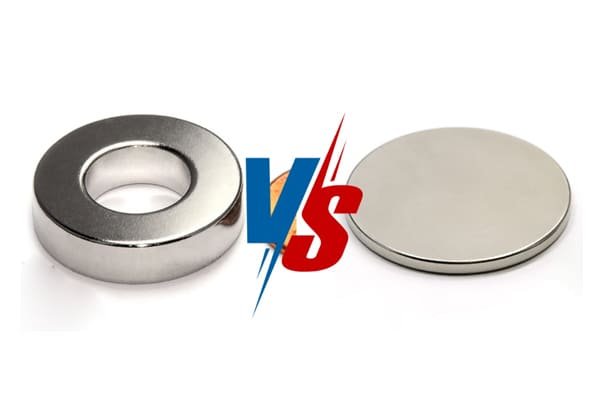
- 2. Shape / Thickness (Permeance Coefficient, Pc): This is the most critical and often overlooked factor. A magnet's shape, specifically its length-to-diameter ratio (L/D), determines its Permeance Coefficient (Pc). Thin, flat magnets have a low Pc, making them very susceptible to demagnetization. Thick, chunky magnets have a high Pc and are much more stable [9][15]. This is why a thin N52 magnet can fail at a temperature where a thicker N35SH magnet would perform perfectly.
- 3. Magnetic Circuit9: A magnet in a "closed" circuit (e.g., with steel pole pieces) is more stable than a magnet operating in "open air" because the circuit helps guide the magnetic flux [48].
Design Insight: Temperature ratings are guidelines. Your magnet’s shape (Pc) and operating point on the BH curve decide if losses are reversible or irreversible.
How Do You Choose the Right Magnet for High-Temperature Applications?
You're designing a motor, wireless charger, or industrial sensor that will get hot. Choosing the wrong magnet grade means certain failure, leading to product recalls and a damaged reputation.
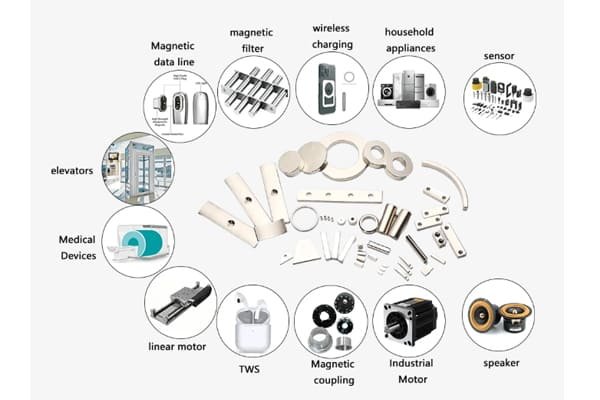
For motors, prioritize high-coercivity grades11 (SH, UH) for stability. For wireless charging, focus on alignment, thermal margin12 (M, H grades), and a robust 13-selection">[coating](https://en.wikipedia.org/wiki/Magnetic_implant)13. For harsh industrial use, choose inherently stable materials like Ferrite or SmCo14, or fully encapsulate the NdFeB magnet15.
Engineering for the Application
Most real failures are application-related. Here’s how I advise my clients for their specific needs:
For High-Performance Motors
High-temperature demagnetization is the silent killer of motor performance. Efficiency is limited by magnetic stability, not just peak strength. You must engineer for the application load, not just catalog values.
- Insight: Choose HcJ-first. A well-designed N42SH/UH magnet will outperform a thin N52 at elevated temperatures because it remains stable. A 20-30°C temperature margin is a wise investment.
- Get grade & coating13 advice for your motor.
For Wireless Charging
Here, performance depends more on magnetic alignment than power input. Small dimensional deviations cause large efficiency losses, which generate more heat and create a vicious cycle of failure.
- Insight: Balance force, thickness, and assembly tolerance. A robust coating13 (like Epoxy) is non-negotiable to protect against long-term heat and humidity in a consumer device.
- Get grade & coating13 advice for your wireless charger.
For Industrial Equipment
Industrial magnet failure2 is a system issue. Downtime costs far more than the price difference between magnet suppliers.
- Insight: In harsh environments with heat, chemicals, and impact, NdFeB is often the wrong choice. Prioritize reliability with Ferrite or SmCo14. If NdFeB's strength is essential, it must be fully protected in a stainless steel housing.
- Get grade & coating13 advice for your industrial application.
NdFeB vs. SmCo vs. Ferrite: Which is Best for the Heat?
You know you need a magnet for a hot environment, but which material is the right one? Making the wrong choice can lead to overspending or, worse, a failing product.
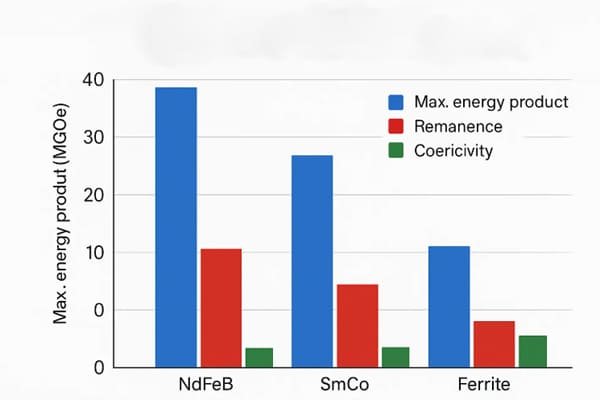
NdFeB is strongest but has the lowest heat tolerance. SmCo offers excellent performance at high temperatures and great corrosion resistance but is brittle and more expensive. Ferrite is the weakest but is cheap and extremely stable at high temperatures [24][93].
A Practical Selection Checklist
Choosing a magnet material is a trade-off between performance, temperature resistance, and cost. Here’s a simple decision table to guide you.
| Factor | NdFeB Magnet | SmCo Magnet | Ferrite (Ceramic) |
|---|---|---|---|
| Strength (BH)max | Strongest | Strong | Weakest |
| Max Operating Temp. | Up to 230°C | Up to 350°C | Up to 250°C |
| Corrosion Resistance | Poor (Requires Coating) [24][38][85] | Excellent | Excellent |
| Relative Cost | Medium | High | Lowest |
| Best For | High-strength applications where space is limited and temperature is controlled (e.g., consumer electronics, some motors). | High-temperature, high-performance applications where reliability is critical (e.g., aerospace, military, performance motors). | Low-cost, high-volume applications where space is not a major concern and extreme temperature/corrosion resistance is needed. |
When in doubt, talk to a magnet engineer. A short consultation early in the design process can save you from a costly redesign later. At MagniPro, we provide this expertise, backed by our ISO 9001 certified quality system and comprehensive in-house testing.
Conclusion
Understanding how temperature affects magnet strength16 is key to engineering a reliable product. Look beyond the datasheet, consider the grade, shape (Pc), and application environment, and you will avoid the most common causes of failure.
Further Reading & Resources
| Resource | Description | Call to Action |
|---|---|---|
| Understanding BH Curve10s | A practical guide on how to read a demagnetization curve to predict a magnet's performance at different temperatures. | Learn to Read the Curves |
| NdFeB Grades Explained | Our comprehensive guide to NdFeB grades, explaining what the numbers and letters mean for your design. | View Grade Chart |
Understanding the impact of temperature on magnets is crucial for ensuring their reliability in various applications. ↩
Understanding the causes of magnet failure can help you avoid costly mistakes in your designs. ↩
Gain valuable insights that can help you choose the right magnet for your application. ↩
Explore the concept of reversible loss to better understand how magnets can recover strength after cooling. ↩
Discover the significance of the Curie Temperature and how it affects magnet performance. ↩
Learn about irreversible loss to prevent permanent damage to your magnets in high-temperature applications. ↩
Understanding intrinsic coercivity helps in selecting the right magnet for high-temperature applications. ↩
Learn how the shape of a magnet influences its stability and performance under heat. ↩
Explore the role of magnetic circuits in enhancing magnet performance and stability. ↩
Understanding the BH curve is essential for predicting magnet behavior under different temperatures. ↩
Learn why high-coercivity grades are crucial for maintaining magnet performance in hot environments. ↩
Explore the concept of thermal margin to ensure your magnet operates reliably in high-temperature settings. ↩
Learn how proper coating can enhance magnet durability and performance in harsh environments. ↩
Compare Ferrite and SmCo magnets to make informed decisions for your specific application needs. ↩
Discover the strengths and weaknesses of NdFeB magnets for various applications. ↩
Explore the different factors that determine magnet strength and how to measure it effectively. ↩