Struggling to select the right NdFeB magnet1? Choosing the wrong one leads to project delays and costly failures. This guide transforms you into an expert buyer, ensuring success.
To master NdFeB magnet sourcing, you must follow a systematic process. First, define your application's environment, especially temperature and corrosion risks. Next, specify the exact geometry, tolerances, and magnetization direction2. Finally, select a performance grade3 that balances magnetic strength with thermal stability4 and cost.
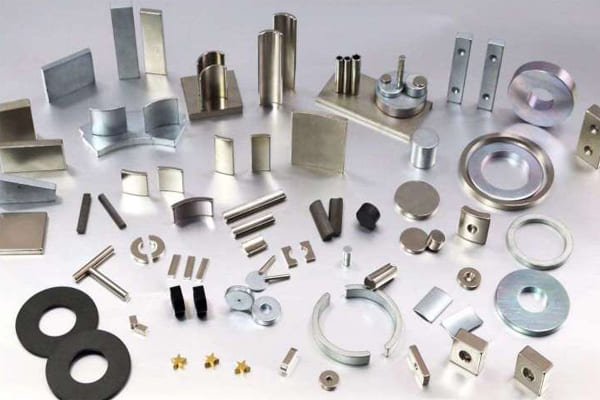
I've spent over a decade in the NdFeB magnet industry, and I've seen countless projects succeed or fail based on the very first step: magnet selection5. Many people, even experienced procurement managers, think it's all about finding the lowest price for the highest grade. But the reality is much more nuanced. A magnet is not just a commodity; it's a critical, application-specific component6. Choosing a supplier is a risk management decision, not just a price comparison.
This guide is designed to walk you through the same decision-making process I use with my clients. We'll break down the complex world of magnet grades7, coating8s, and quality control9 into simple, actionable steps. My goal is to empower you with the knowledge to avoid common pitfalls and confidently source the perfect magnet for your project, ensuring you enhance your yield and avoid costly rework.
Is Just Choosing 'N52' Enough for Your Application?
You've heard N52 is the strongest, so you specify it. But then your product fails in the field due to heat. Relying on grade alone can lead to catastrophic demagnetization10.
No, "N52" is not enough. You must also consider the magnet's maximum operating temperature, indicated by the letter after the number (e.g., M, H, SH). This rating is often more critical for performance and longevity than the raw magnetic strength (the number).
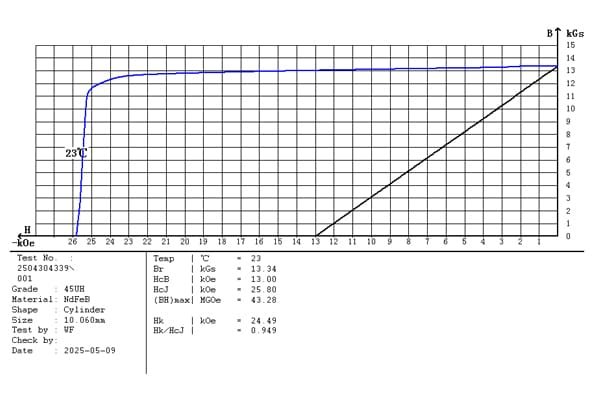
In my experience, one of the most common failures I see is overlooking thermal stability4. A client once insisted on using N52 magnets for a motor application because they wanted maximum power. The prototypes worked great in the lab. However, once in the field, the motors operated at a higher temperature, and the magnets started to lose jejich magnetism permanently. The entire production batch was a write-off. Higher magnetic strength means nothing if thermal stability4 is ignored.
Understanding Magnet Grades
NdFeB magnet grades tell you two main things: strength and heat resistance.
- The Number (e.g., 35, 42, 52): This represents the Maximum Energy Product in MGOe. Simply put, a higher number means a stronger magnet.
- The Letter (e.g., M, H, SH): This indicates the magnet's intrinsic coercivity, which translates to its resistance to demagnetization10 from heat. The further along the alphabet, the better the heat resistance.
Here is a simple table to guide you:
| Grade Suffix | Max. Operating Temp. (Approx.) | Common Application Scenario |
|---|---|---|
| (None) / N | ~80°C (176°F) | Consumer electronics, toys, general use |
| M | ~100°C (212°F) | Standard motors, sensors |
| H | ~120°C (248°F) | High-performance motors, automotive parts |
| SH | ~150°C (302°F) | Demanding industrial motors, generators |
| UH | ~180°C (356°F) | Aerospace, high-temp industrial sensors |
| EH | ~200°C (392°F) | Specialized high-temperature applications |
| AH(TH) | ~220°C (428°F) | Extreme environment applications |
Remember, even the same grade, like N42H, does not guarantee identical performance across different factories. Consistent manufacturing processes are key, which is why engineering consistency11 often matters more than a single peak performance value.
How Do You Select the Right Coating to Prevent Magnet Corrosion?
Your powerful NdFeB magnets are starting to rust. This corrosion weakens them, causing product failures and unhappy customers. The solution is choosing the right protective coating8 for the specific environment.
To prevent corrosion, you must match the coating to the operating environment. For dry, indoor use, Zinc (ZN) is a cost-effective option. For humid conditions, Nickel-Copper-Nickel (Ni-Cu-Ni) is the industry standard. For harsh or specialized applications, consider Epoxy or Parylene.
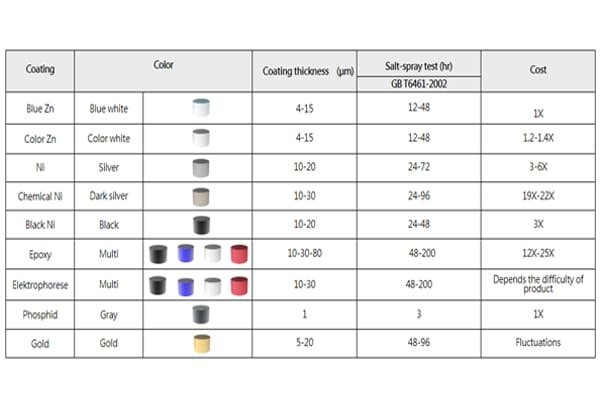
I often tell my clients, like Reza in Iran who uses our magnets in his wireless charging products, that 90% of corrosion issues come from a mismatch between the coating and the environment. NdFeB magnets contain iron and are naturally prone to rust. [4][15][28] The coating isn't just for looks; it's a critical protective shield. For his application, where the magnet is embedded in glass, a thin, durable coating like black epoxy is perfect. It provides excellent corrosion resistance12 and a clean aesthetic. For another client in Cyprus, whose products are used in acoustic solutions near the sea, we recommended a double layer of Ni-Cu-Ni plus Epoxy to withstand the salty, humid air.
A Practical Coating Guide
Choosing the right coating8 is a balance of protection, cost, and dimensional tolerance. Here’s a breakdown of the most common options to help you decide:
| Coating Type | Common Abbreviation | Corrosion Resistance | Typical Applications & Notes |
|---|---|---|---|
| Zinc | ZN | Basic | Cost-effective for dry, indoor environments. Can produce a white powder over time. |
| Nickel-Copper-Nickel | Ni-Cu-Ni | Good | The industry standard. Provides a clean, metallic finish and good corrosion/wear resistance. |
| Epoxy | Black Epoxy | Excellent | Great for humid or outdoor use. Provides good adhesion for gluing. Common in motors and sensors. |
| Parylene | Parylene C / N | Superior | A very thin, uniform polymer coating. Ideal for medical devices and high-precision electronics. |
Never underestimate the importance of the coating. Discuss your product's end-use environment with your supplier in detail. A good supplier will help you select a coating that protects your investment and ensures the long-term reliability of your product.
Can Machining and Magnetization Errors Ruin Your Perfect Magnet?
You've specified the perfect material and grade. Yet, the final magnets don't work in your assembly. This frustrating failure is often caused by hidden errors in machining or magnetization.
Absolutely. A perfect material can be ruined by post-processing errors. Incorrect magnetization direction can destroy an entire batch. Likewise, loose dimensional tolerances13 can make assembly impossible and create inconsistent performance, as NdFeB is a brittle, application-specific component6, not a standard part.
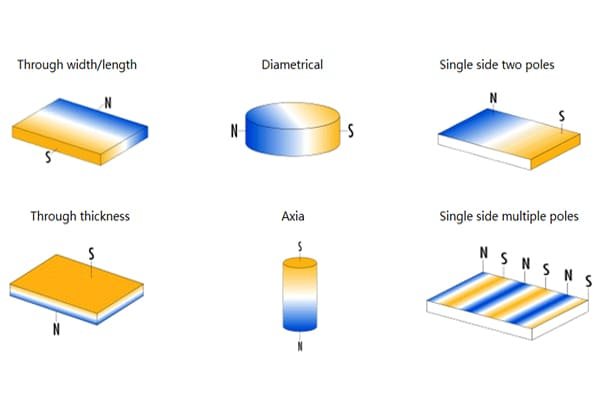
I'll never forget a new client who came to us after a massive failure. They had ordered tens of thousands of arc magnets for a motor from another supplier. The material grade and coating were correct, but the supplier magnetized them axially (through the thickness) instead of radially (through the diameter). The motors produced almost no torque. The entire batch was useless, and it delayed their product launch by months. This is a painful lesson that the true risks in NdFeB manufacturing often lie in the final steps: machining, coating, and magnetizing.
Why Precision Matters
- Machining and Tolerances: Sintered NdFeB is hard and brittle, similar to ceramic. [17] It is cut and ground into its final shape. The dimensional tolerance (e.g., +/-0.05mm) is critical. [8] If tolerances are too loose, magnets won't fit into your assembly, or the air gap in a motor might be inconsistent, leading to performance variations.
- Magnetization Direction: Before ordering, you must clearly define the magnetization direction2 on your drawing. A magnet can be magnetized in many ways:
- Axially: Through the length/thickness.
- Diametrically: Through the diameter.
- Radially: Outwards from the center.
- Multi-pole: Multiple N and S poles on a single face.
An error here is not correctable. The magnet would have to be completely demagnetized (with heat, which can damage it) and re-magnetized, which is often not feasible. NdFeB magnets are not standard parts; they are engineered components. Early technical confirmation of these details can save you months of redesign and rework.
How Do You Choose a Reliable NdFeB Supplier, Not Just a Cheap One?
Low prices are tempting, but they often hide risks. You face quality issues, shipment delays, and even fake certificates, jeopardizing your entire project. The key is to vet suppliers methodically.
Look beyond the price tag. A reliable supplier has transparent quality systems (like ISO 900114), offers verifiable test reports for each batch, and communicates clearly. [16] Ask for their quality inspection process, certifications, and how they handle logistics15 and payments to your country.
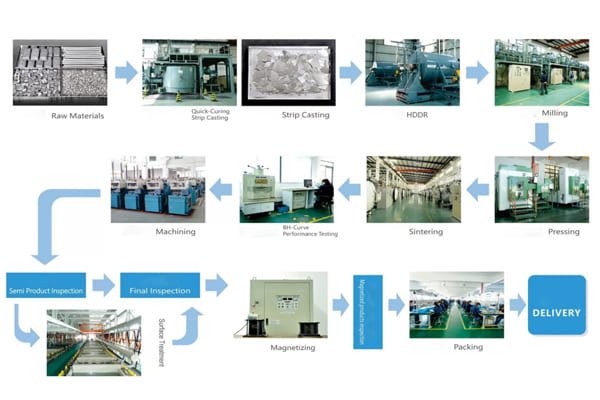
Choosing a supplier is a risk decision, not a price decision. I work with clients like Reza in Iran and Charalampos in Cyprus, and their biggest pain points are always the same: inefficient communication, shipping delays, and quality inconsistencies. A cheap price means nothing if the shipment is late and you miss your peak sales season, or if 10% of the magnets are defective.
That’s why at MagniPro, we are transparent about our processes. We know that for our customers, consistency is more important than peak magnetic values on a datasheet.
What to Ask a Potential Supplier
To protect yourself, treat your supplier selection like an engineering audit. Here’s a checklist:
- Quality Systems & Certifications:
- "Can you provide your ISO 9001 certificate? What about IATF 16949 if for automotive?" A legitimate supplier will provide this immediately. [1][51]
- "What is your quality inspection process? Do you provide a Certificate of Analysis (COA) with each shipment?"
- Performance & Consistency Testing:
- "How do you test for magnetic performance, corrosion resistance12 (Salt Spray Test), and thermal stability4?" [2][52]
- "What is your AQL16 (Acceptable Quality Limit) for dimensional and cosmetic inspection?" This shows they understand batch consistency.
- Logistics and Payment:
- "What are your shipping options to my country (e.g., Iran/Cyprus)? Can you handle the specific packaging and labeling requirements for air/sea freight?" [2]
- "What are your payment terms? Do you offer flexible options?" [11][63]
Choosing the right partner is the most critical decision you'll make. Early technical confirmation and thorough supplier vetting17 can save you months of rework and protect your business.
Conclusion
Mastering NdFeB sourcing is about a systematic approach to selection, coating8, and supplier vetting. This ensures your project's technical and commercial success. Talk to our engineers for expert guidance.
Explore comprehensive guides on NdFeB magnets to enhance your sourcing knowledge and avoid costly mistakes. ↩
Understanding magnetization direction is crucial for ensuring optimal performance in your applications. ↩
Selecting the right performance grade is essential for balancing strength and cost. ↩
Understanding thermal stability can prevent costly failures in your applications. ↩
Learn effective strategies for magnet selection to ensure project success and avoid delays. ↩
Understanding the application-specific nature of NdFeB magnets can guide your sourcing decisions. ↩
Discover the significance of magnet grades to make informed choices for your projects. ↩
Find out how the right coating can protect your magnets and enhance their longevity. ↩
Explore best practices in quality control to ensure the reliability of your magnet supply. ↩
Understanding the causes of demagnetization can help you avoid failures in your projects. ↩
Understanding engineering consistency can help ensure reliable performance across batches. ↩
Explore options for corrosion resistance to ensure your magnets perform reliably in various environments. ↩
Learn how dimensional tolerances impact the performance and fit of your magnets. ↩
Learn why ISO 9001 certification is a key indicator of supplier reliability and quality. ↩
Effective logistics planning is crucial for timely delivery and project success. ↩
Understanding AQL can help you assess the quality standards of your magnet suppliers. ↩
Effective supplier vetting can save you from quality issues and project delays. ↩