Are you tired of motors that lose power and overheat unexpectedly? You specified a strong magnet, but your product is still failing in the field, leading to costly failures and a damaged reputation.
The secret isn't just picking the strongest NdFeB magnet1, but the right grade for your motor's specific temperature and load. For motor applications, prioritizing thermal stability2 (a high Hcj grade3) over raw strength (the 'N' number) is the key to preventing irreversible demagnetization4 and ensuring long-term reliability.
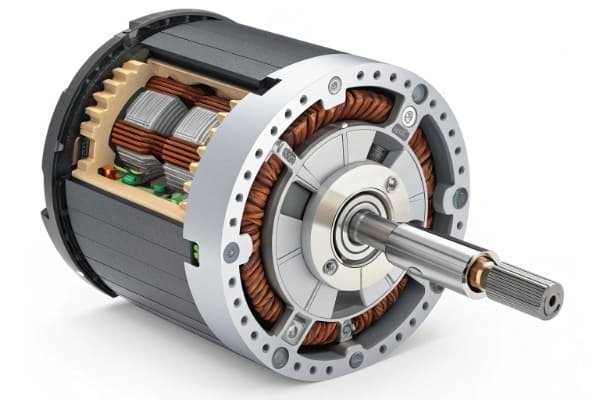
I see this mistake all the time. An engineer, focused on achieving the highest torque in the smallest package, defaults to a high-strength N52 magnet5. But they forget a critical fact: motor magnets don't operate at room temperature. I once helped a client whose new EV motor was failing thermal tests. They were baffled. Their design was solid, but their N52 magnets were permanently weakening at operating temperatures. We had to change their selection to a lower-strength but higher-temperature grade. This isn't just about theory; this is about preventing catastrophic failure. Let's walk through how to select motor magnets like an expert, so you can engineer for reliability, not just catalog specs.
Why Are NdFeB Magnets the Top Choice for Modern Motors?
Are you struggling to make your motor smaller, more powerful, and more efficient? Using older ferrite magnets often means compromising on performance or size, limiting your design potential.
NdFeB magnets offer the highest energy density6 of any permanent magnet material available today . This allows for the design of motors with superior torque density7, higher efficiency, and a more compact size, which ultimately reduces overall energy consumption8 and weight .
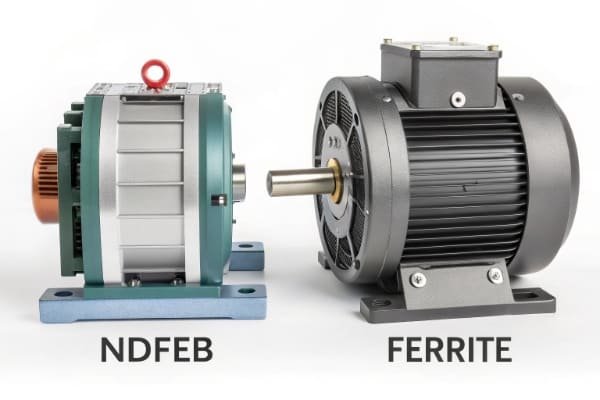
For motor designers, the move to NdFeB magnets is a game-changer. It’s about getting more power out of a smaller package. This isn't just a minor improvement; it fundamentally changes what's possible in applications from electric vehicles to high-precision robotics and power tools .
Here’s a simple breakdown of why NdFeB is the dominant choice:
| Feature | NdFeB Magnet | Ferrite Magnet | Engineering Impact |
|---|---|---|---|
| Torque Density | Very High | Low | Get more power from a smaller, lighter motor. |
| Efficiency | High | Medium | Less energy is wasted as heat, improving battery life and performance. |
| Size & Weight | Compact & Light | Bulky & Heavy | Enables miniaturization and reduces overall product weight. |
| Energy Use | Lower | Higher | Essential for battery-powered applications and energy conservation. |
Ultimately, using NdFeB magnets means you're not just creating a better motor; you're enabling a better, more efficient end product. That's why they are at the heart of modern high-performance motor design.
Does Every Motor Type Need the Same NdFeB Solution?
Are you using a "one-size-fits-all" approach for magnet selection9? Applying the same magnet from a simple servo motor to a high-demand EV traction motor is a recipe for either over-engineering or catastrophic failure.
Absolutely not. Each motor type has a unique operating environment. High-speed BLDC motors10 require magnets that minimize eddy currents, while servo motors11 demand exceptional consistency for precision. EV traction motors12 need the highest thermal stability2 (high Hcj grade3s) to survive extreme loads and temperatures .
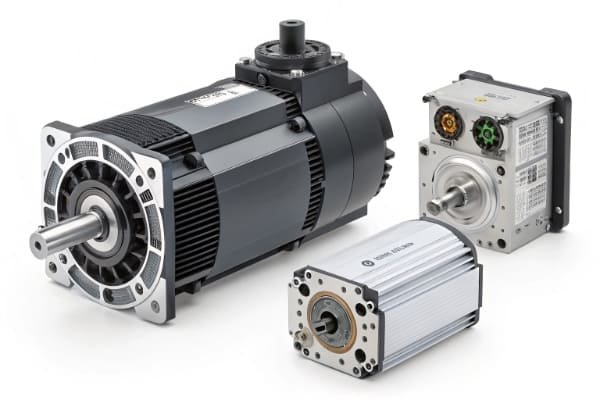
Thinking a magnet is just a magnet is a huge mistake I see procurement managers make. The application is everything. I always start by asking my clients about the motor type and its real-world operating conditions.
- BLDC and PMSM Motors: These are the workhorses in everything from drones to home appliances. They typically use arc or segment magnets. For high-speed versions, heat from eddy currents is a major concern . Here, using laminated magnets—which are segmented to create electrical insulation—is a smart engineering choice to reduce heat and improve efficiency .
- Servo Motors: Precision is the goal. These motors require magnets with extremely tight dimensional and magnetic flux consistency to ensure smooth, predictable movement. Here, the focus is less on raw power and more on the supplier's ability to maintain tight batch-to-batch tolerances. Rotor design success depends on magnet tolerance consistency, not averages.
- EV Traction Motors: This is the ultimate test for a magnet. These motors run hot, face intense demagnetizing fields, and are expected to last for years. Only high-coercivity grades (UH, EH, or higher) should be considered. For these applications, designing with a generous thermal margin13 is not optional; it's essential for preventing premature failure.
Is the Shape of Your Motor Magnet a Hidden Performance Risk?
Are you choosing your motor magnet's shape based on what's easiest to assemble? Be careful. That simple decision could be creating a hidden thermal risk that undermines your motor's reliability.
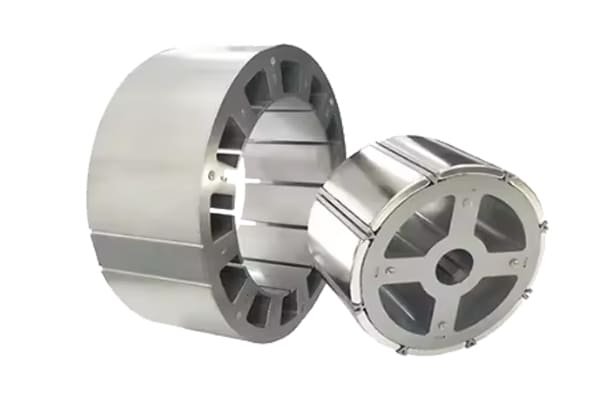
Yes, the magnet's shape is critical. It directly influences the magnetic circuit and determines the "Permeance Coefficient14" (Pc), or load line. Thin arc magnets have a low Pc, making them more vulnerable to irreversible demagnetization4 at high temperatures. Taller, thicker shapes provide a higher, more robust Pc.
Let’s get practical. The Pc value essentially tells you how efficiently the magnet is working in your design. A low Pc is like driving your car in the wrong gear—it puts more stress on the magnet, especially when it gets hot.
- Arc or Tile Magnets: These are very common and cost-effective . However, a design insight I always share is that thin arc magnets have a low Pc. This puts their operating point lower on the BH curve, dangerously close to the "knee" where permanent demagnetization occurs, especially at high temperatures.
- Segment or "Bread-loaf" Magnets: These are often thicker. This increased height-to-surface-area ratio gives them a higher Pc. This makes the magnet inherently more stable and resistant to thermal demagnetization. They are a safer choice for high-stress applications.
- Ring Magnets: While a solid, radially magnetized ring seems ideal for assembly, manufacturing them from sintered NdFeB is difficult and costly. A more practical and often superior solution is to use an assembly of several precisely machined segment magnets to form a ring. This approach often delivers better magnetic consistency and is more cost-effective.
Are You Just Picking the Highest "N" Number for Your Motor?
Are you defaulting to N52 magnets to get maximum power? I understand the temptation, but this is one of the most common and costly mistakes in motor design, often leading to premature failure.
For motors, stop focusing on the "N" number. The letter suffix (H, SH, UH, EH, AH) is far more important. This letter indicates the magnet's Intrinsic Coercivity (Hcj) and its ability to resist permanent demagnetization from heat—the single biggest threat to a motor's long-term performance.
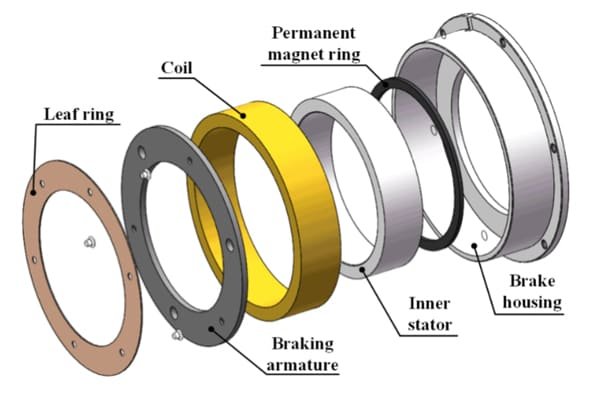
A magnet's grade tells a story. The number (e.g., 48, 52) refers to its Maximum Energy Product, or (BH)max—its potential strength. But the letter suffix tells you how tough it is. In a motor, toughness beats potential strength every time. Motor magnets must be engineered for the application load, not just catalog values.
| Grade Suffix | Max. Operating Temp. (Approx.) | Typical Application | Engineering Insight |
|---|---|---|---|
| N (Standard) | 80°C | Low-cost consumer goods, non-critical applications. | Avoid for most serious motor applications. |
| H (High Temp) | 120°C | Industrial motors, servos, where temps are moderate. | A good baseline for many motors. |
| SH (Super High) | 150°C | Automotive applications, high-performance motors15. | The "sweet spot" for many demanding designs. |
| UH / EH / AH | 180°C - 230°C | EV traction motors12, aerospace, extreme environments. | Non-negotiable for high-reliability, high-heat applications. |
A client once insisted on N52 for a compact pump motor, wanting maximum torque. The motor ran at 110°C. We warned them. As predicted, the N52 magnets demagnetized in the field. We replaced them with N48H magnets. The room-temperature torque was slightly lower, but at 110°C, the performance was stable and reliable. Choosing a grade without enough temperature margin directly shortens motor life.
Is High-Temperature Demagnetization Silently Killing Your Motor?
Is your motor testing perfectly on the bench, but you're getting field reports of torque loss and overheating? This frustrating, seemingly random failure is almost always caused by a hidden enemy.
Yes, high-temperature demagnetization is the silent killer of motor performance. As the magnet heats up under load, its ability to resist demagnetization weakens. If it exceeds its critical limit, it suffers irreversible strength loss. This loss is permanent and gets worse over time.
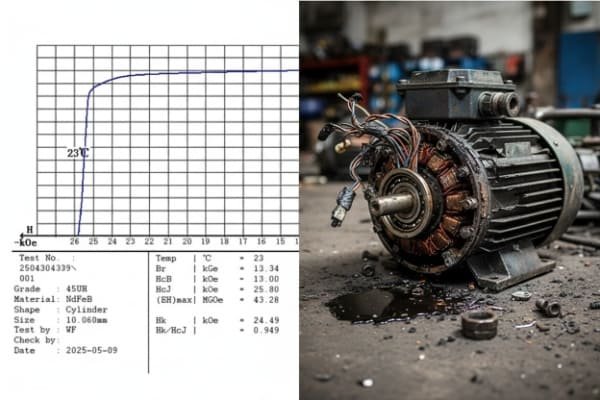
This is the most critical concept for motor magnet reliability. Every magnet has a point of no return, called the "knee" of its BH curve. At room temperature, this knee is far out of the way. But as the magnet gets hot, this knee moves up and to the left. If your motor's operating point (determined by its design) falls below this shifting knee, the magnet is permanently damaged.
I saw a classic case with a drone company. Their high-performance drones worked great for the first few flights, but then performance would degrade. The cause? They selected a magnet grade with a 120°C rating, and their motor was peaking at 115°C. They thought they had a 5°C margin. But they didn't account for the strong demagnetizing fields inside the motor, which, combined with the heat, pushed the magnets past their limit.
The solution is to design with a sufficient thermal margin13. I advise my clients to choose a grade that provides at least a 20-30°C buffer above their maximum expected operating temperature. This accounts for unforeseen loads and ensures long-term magnetic stability.
Does Magnet Coating Really Matter Inside a Motor?
Are you thinking of the magnet's coating as just a cosmetic finish? Or maybe skipping it to save a few cents? This is a dangerous assumption that can lead to corrosion, electrical shorts, and catastrophic motor failure.
Coating is absolutely critical. Sintered NdFeB magnets are made of a powder-based material that is highly susceptible to rust and corrosion, especially in humid or fluctuating temperature environments. The right coating prevents rust and provides essential electrical insulation to reduce performance-killing eddy currents.
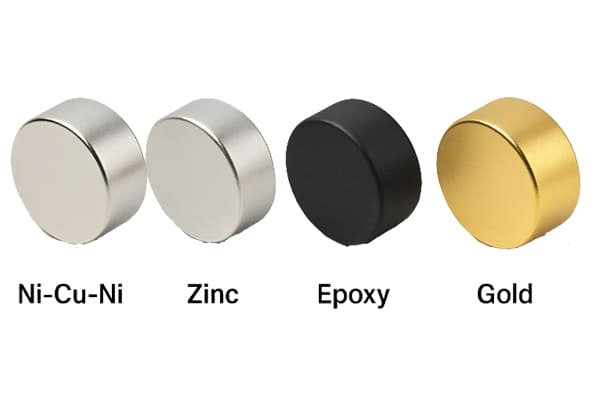 An uncoated NdFeB magnet can start to corrode in just a few days in a humid environment. This corrosion flakes off, contaminating the motor, and degrades the magnet's performance. More importantly, in a high-speed motor, a conductive magnet surface allows eddy currents to flow, which generates immense heat and wastes energy.
Here’s your engineering guide to motor magnet coating16s:
- Ni-Cu-Ni (Nickel-Copper-Nickel): This is the most common and cost-effective coating. It provides good all-around corrosion and abrasion resistance for most standard motor applications.
- Epoxy (Black): Epoxy offers superior corrosion resistance17 and is an excellent electrical insulator. We often apply it as a top layer over Ni-Cu-Ni (Ni+Epoxy) for harsh environments or when high insulation is needed to fight eddy currents.
- Parylene: This is a premium, ultra-thin polymer coating applied in a vacuum. It provides the most uniform coverage and the highest dielectric strength, making it ideal for miniaturized, high-frequency, or mission-critical motors.
For any serious motor application, you should specify your coating requirements in the purchase order, including required salt spray test hours. A reliable supplier like MagniPro performs these tests to validate coating performance and guarantee reliability.
Conclusion
Selecting the right NdFeB magnet for a motor is not about choosing the highest strength. It is an engineering discipline focused on thermal stability2, shape, and coating to ensure long-term, reliable performance.
Don't Let the Wrong Magnet Derail Your Project
Choosing the wrong magnet can lead to costly redesigns and field failures. Don't leave it to chance. My role as an engineer is to help you select the most reliable and cost-effective magnet for your specific application. Submit your motor requirements—including operating temperature, dimensions, and torque needs—and my team and I will provide a technical recommendation from our IATF16949-certified facility to ensure your design is a success.
Explore the advantages of NdFeB magnets, including energy density and efficiency, to enhance your motor designs. ↩
Understanding thermal stability is crucial for selecting magnets that ensure long-term reliability in motors. ↩
Learn about Hcj grades and their importance in preventing demagnetization in high-temperature applications. ↩
Discover the factors that lead to demagnetization and how to mitigate them in motor applications. ↩
Discover why focusing solely on N52 magnets can lead to costly design failures in motor applications. ↩
Explore the concept of energy density and its importance in selecting magnets for efficient motors. ↩
Learn about torque density and its critical role in designing high-performance motors. ↩
Understand the relationship between magnet selection and energy efficiency in motor applications. ↩
Get insights into the key factors for selecting the right magnets to ensure motor reliability. ↩
Find out how NdFeB magnets enhance the performance of BLDC motors in various applications. ↩
Explore the specific magnet requirements for servo motors to ensure precision and reliability. ↩
Understand the unique demands of EV traction motors and how to choose the right magnets for them. ↩
Explore the concept of thermal margin and its role in preventing magnet demagnetization. ↩
Discover the significance of the Permeance Coefficient in optimizing magnet performance. ↩
Explore the characteristics of high-performance motors and the role of magnets in achieving them. ↩
Learn about different coatings for NdFeB magnets and their impact on performance and durability. ↩
Understand how proper coating can prevent corrosion and enhance the lifespan of motor magnets. ↩