Designing wireless chargers with poor alignment, low efficiency, and overheating? These issues lead to a bad user experience, hurting your brand. The key is mastering NdFeB magnet design.
A well-designed NdFeB magnet array1, typically a ring of N52 magnets2, ensures precise alignment for Qi/Qi2 standards. Paired with a ferrite shielding sheet3, it maximizes charging efficiency4 by focusing magnetic flux and preventing interference, solving common problems like overheating and slow charging.
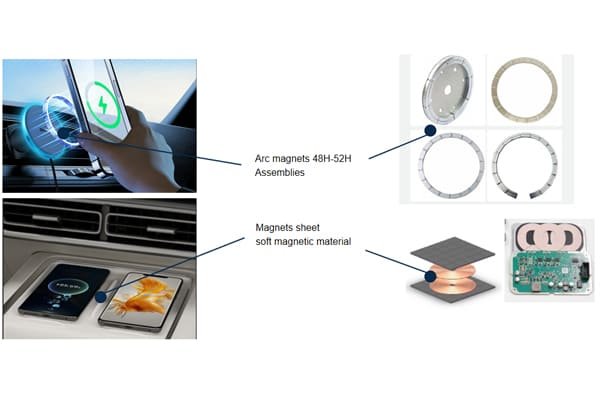
Getting this design right is more than just picking a strong magnet. It's a careful balance of materials, dimensions, and standards that separates a market-leading product from a problematic one. As someone who has helped countless clients navigate these challenges, I know how critical these details are for your success. Let's break down exactly how you can engineer the perfect magnetic solution for your wireless charging products and avoid common pitfalls.
What is the Exact Role of NdFeB Magnets and Ferrite Sheets in Wireless Charging?
Confused about why you need both a magnet and a ferrite sheet? This confusion can lead to over-engineering or, worse, inefficient and unsafe products. Let's clear this up now.
NdFeB magnets (like N52 rings) provide the strong attraction for precise physical alignment required by MagSafe and Qi2. Soft ferrite sheets are crucial for shielding electronics and guiding the charging flux, boosting efficiency and preventing energy loss as heat. They perform two distinct, essential jobs.
![A diagram showing the function of NdFeB magnets and ferrite sheets in a wireless charger]https://nfbmag.com/wp-content/uploads/2026/01/A-technical-drawing-of-a-MagSafe-compatible-magnet-ring-array.jpg")
To build a reliable product, you must understand that these two components are not interchangeable; they work as a team. The Neodymium (NdFeB) magnet array is the "brawn," providing the strong holding force that snaps the device into the perfect charging position every time. This is what creates that satisfying "click" and ensures the charging coils are perfectly aligned.
The soft magnet, usually a flexible ferrite sheet, is the "brain." Its job is to manage the magnetic field. It shields the phone's sensitive electronics from the charging field and prevents the charger's magnetic flux from leaking away. By redirecting the flux toward the receiving coil, it dramatically increases charging efficiency4 and reduces heat buildup.
Here's a simple breakdown:
| Component | Primary Function | Key Material | Main Benefit |
|---|---|---|---|
| NdFeB Magnet Array | Physical Alignment & Holding Force | Sintered NdFeB (e.g., N52) | Perfect positioning, strong connection |
| Soft Ferrite Sheet | Magnetic Shielding & Flux Guidance | NiZn or MnZn Ferrite | Higher efficiency, less heat, EMI reduction |
For Qi standards operating in the 110-205 kHz range, a NiZn ferrite sheet is typically the best choice to minimize energy loss.
How Do You Design a High-Performance MagSafe/Qi2 Magnet Ring Array?
Your magnet ring snaps on, but charging is slow and the device gets hot. This design failure frustrates users and leads to negative reviews. Master the design details to create a flawless product.
A successful magnet ring design balances attraction force with charging efficiency4. Key factors include magnet grade5 (N52 is common), dimensions (especially thickness), polarity layout (e.g., a multipole array6), and its position relative to the charging coil to minimize interference (EMI).
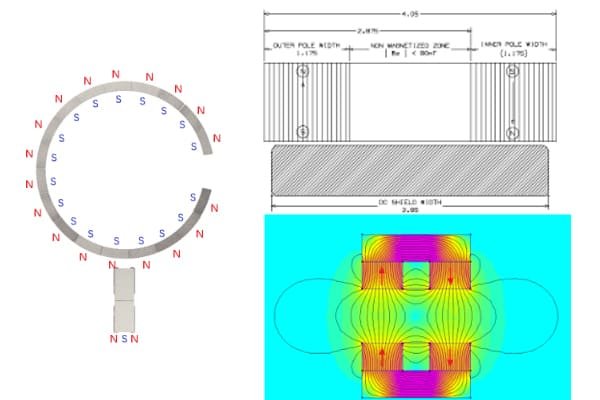
I've seen many clients focus only on making the magnetic attraction as strong as possible, but this can be a mistake. The real goal is to achieve perfect alignment without disrupting the wireless charging field. The magnet ring should be placed just outside the main path of the charging coil to avoid creating eddy currents, which generate heat and reduce efficiency.
Thickness is a critical trade-off. A thicker magnet (like 2.5mm) provides a stronger hold, but a thinner one (like 1.5mm) may offer better coupling efficiency and reduce heat. The choice depends on your product's specific goals—is it for a stationary desk charger or a rugged car mount?
The polarity arrangement is also vital. Most MagSafe-compatible arrays use a specific pattern of alternating North and South poles to create a focused and stable magnetic field. This multipole magnet design ensures the device snaps into the correct orientation and stays there.
| Design Factor | Key Consideration | Impact on Performance |
|---|---|---|
| Magnet Grade | N52 offers a strong field in a compact size. | Higher grades provide stronger force for a given size. |
| Thickness | Balance between holding force and thermal performance7. | Thicker magnets are stronger but can increase heat. |
| Polarity Layout | A multipole array6 ensures correct orientation. | Prevents misalignment and optimizes the magnetic circuit. |
| Position | Keep the magnet outside the primary charging coil path. | Minimizes electromagnetic interference (EMI)8 and heat. |
How Do You Ensure Reliability with the Right Grade, Coating, and Temperature Stability?
Worried your charger magnets will fail in a hot car or corrode from sweat? These failures ruin your brand's reputation. Selecting the right materials from the start prevents these costly problems.
For reliability, choose high-coercivity grades9 like N52H or N52SH for high-temperature environments such as car mounts. Select a durable coating like Epoxy or Parylene for sweat and corrosion resistance10. Always check the magnet's maximum operating temperature to prevent demagnetization.
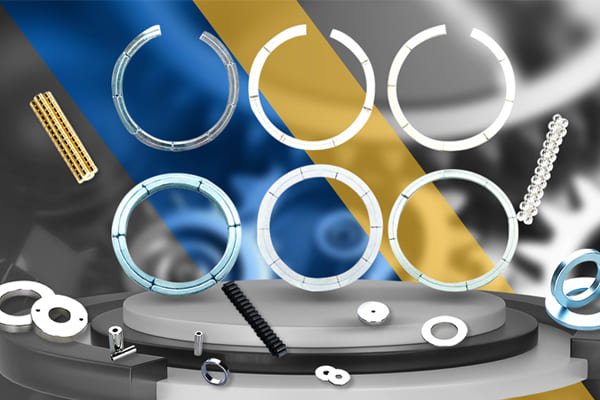
The magnet grade isn't just about strength (the number, like '52'). The letters that follow—M, H, SH, UH—are just as important. They indicate the magnet's maximum operating temperature. A standard N52 magnet might start losing its magnetic properties11 above 80°C, which is easily reached inside a car on a sunny day. For a car charger, specifying an N52H (120°C) or N52SH (150°C) grade is essential to prevent permanent demagnetization and product failure.
Corrosion is another silent killer, especially for wearable devices or products used in humid environments. Sintered NdFeB magnets contain iron and will rust if not properly protected. While a standard Nickel-Copper-Nickel (NiCuNi) coating is good for many applications, it may not be enough for products exposed to sweat or moisture. In these cases, a black Epoxy or even a Parylene coating provides a much more robust barrier against corrosion.
| Coating Type | Salt Spray Test (Typical) | Best Use Case |
|---|---|---|
| Zinc (Zn) | 12-48 hours | Low-cost, dry indoor environments. |
| Nickel (NiCuNi) | 24-72 hours | General purpose, good appearance. |
| Epoxy (Black) | 72-200 hours | Humid environments, resistance to mild chemicals. |
| Parylene | >200 hours | Medical devices, extreme moisture/sweat resistance. |
How Can You Verify Magnet Quality and Avoid Supplier Issues?
Have you ever received a shipment of magnets that don't perform as promised? Or dealt with suppliers who are slow to respond and whose certificates seem questionable? These problems can halt your production line.
Eliminate sourcing risks by partnering with a manufacturer certified to IATF 1694912 and ISO 9001 standards. To ensure quality, you must request detailed test reports (like salt spray, thermal shock) and a Certificate of Analysis (COA)13 with every shipment to verify performance.
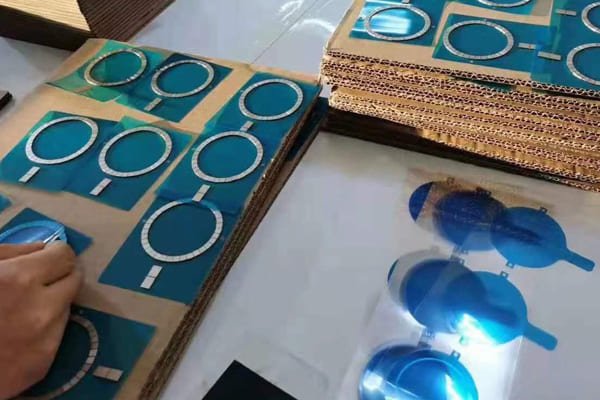
As a procurement manager or business owner, your biggest risk is inconsistency. A supplier's first samples might be perfect, but what about the 10,000th piece in your mass production run? This is where robust quality management systems14 are non-negotiable.
Certifications like ISO 9001 are a baseline, but for applications like automotive chargers, IATF 16949 is the gold standard. It ensures that your supplier has rigorous process controls in place to deliver consistent quality. Don't just take their word for it; ask for the certificate and verify it.
Furthermore, make specific testing requirements part of your purchase order. For a wireless charger magnet, you should request reports for:
- Magnetic Properties: Br (Remanence) and Hcj (Intrinsic Coercivity) to confirm the grade.
- Dimensions & Tolerances: To ensure proper assembly.
- Coating Thickness & Adhesion: To guarantee corrosion resistance10.
- Environmental Tests: Such as Salt Spray Test (to simulate corrosion) and Thermal Shock Test (to ensure durability in changing temperatures).
A reliable partner will not hesitate to provide a full COA and test data with each batch. This transparency is your best defense against quality fade and supplier fraud. At MagniPro, this is a standard part of our process because we believe your success is our success.
Conclusion
Designing a magnetic wireless charger requires balancing magnet array design, material selection, and rigorous testing. Partnering with an expert manufacturer ensures reliability and enhances your product's performance and yield.
Understanding NdFeB magnet arrays is crucial for optimizing wireless charger design and performance. ↩
Explore the unique properties of N52 magnets to enhance your wireless charging solutions. ↩
Learn how ferrite sheets can maximize charging efficiency and prevent overheating. ↩
Discover strategies to enhance charging efficiency and user satisfaction. ↩
Learn about magnet grades to select the right materials for your applications. ↩
Explore how multipole arrays can optimize magnetic fields for better alignment. ↩
Understanding the relationship between thickness and thermal performance is vital for product reliability. ↩
Understanding EMI is key to designing effective wireless charging systems. ↩
Discover the advantages of high-coercivity grades for high-temperature applications. ↩
Learn about coatings that protect magnets from corrosion in various environments. ↩
Explore essential magnetic properties to optimize your magnet selection. ↩
Understanding IATF 16949 can help you choose reliable suppliers for your products. ↩
A COA ensures the quality and performance of your magnets, protecting your investment. ↩
Explore the role of quality management systems in ensuring consistent product quality. ↩