Struggling with magnets that fail in your final product despite perfect specs? This frustrating experience often means your design is at risk, leading to costly delays and rework.
Magnetism works by aligning microscopic magnetic domains1 within a material. Permanent magnets lose their strength when these domains are scrambled by external factors, primarily: 1) Excessive heat, 2) strong opposing magnetic fields2, 3) physical shock3, and 4) environmental corrosion4. Real-world failures almost always stem from an incorrect magnet selection5 for the specific application, not from poor material quality.
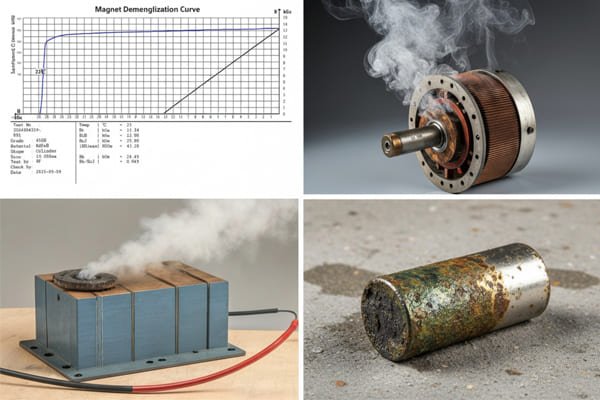
In my years as a magnet manufacturer, I've learned a crucial lesson: magnets rarely fail in theory, but they fail all the time in real applications. An engineer will select a magnet that looks perfect on the datasheet, but once it's inside a motor that heats up or a device used in a humid climate, its performance degrades.
This isn't about blaming the magnet's quality. It's about understanding that a magnet is a system component, and its performance is tied to the entire environment it operates in. This guide moves beyond the textbook theory to give you an engineer's perspective on why magnets lose strength and how to prevent it from happening to your project.
Why Do Magnets Lose Strength in Real-World Use (Not Just in Theory)?
Your magnet passed all initial tests but is failing in the field. This unexpected demagnetization can be baffling, causing project delays and forcing expensive redesigns. The problem isn't the theory; it's the application.
Magnets fail in the real world due to a combination of four main stresses: thermal (heat), mechanical (shock/vibration), external fields (opposing magnetism), and environmental (corrosion). Diagnosing which of these is the primary cause is the first step to creating a robust engineering solution.
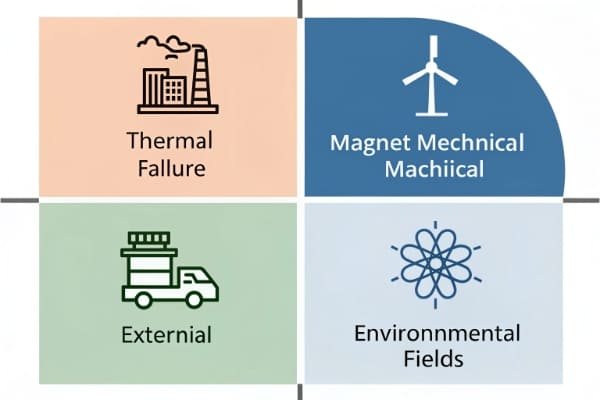
An Engineer's Diagnostic Checklist for Demagnetization
A magnet's strength isn't permanent if its limits are exceeded. I advise my clients to think like a diagnostician. Before selecting a magnet, we review the application against this checklist to identify potential failure points. Magnets don't just "go bad"; they are pushed past their limits.
| Stress Factor | Root Cause | How to Validate & Prevent |
|---|---|---|
| Thermal | Operating temperature exceeds the magnet's intrinsic coercivity6 (HcJ), causing domains to misalign. This is the most common failure mode. | Solution: Select a grade with a sufficient temperature margin (e.g., SH, UH). Validation: Perform thermal cycling tests7 and analyze the second-quadrant [demagnetization curve](https://en.wikipedia.org/wiki/Demagnetizing_field)8 to confirm stability at the working point. |
| Mechanical | Sintered NdFeB is brittle like ceramic. Physical shock or vibration can cause micro-fractures, leading to performance loss or complete failure. | Solution: Design protective housing or use magnet assemblies. For high-speed rotors, use a retaining sleeve. Validation: Conduct drop tests and vibration analysis. |
| External Fields | A strong, opposing magnetic field (like in a motor during a stall) can forcibly realign the magnetic domains, causing demagnetization. | Solution: Choose a magnet with higher coercivity6 (HcJ). Model the magnetic circuit to ensure the magnet can withstand opposing fields. Validation: Test the magnet's performance under worst-case electrical load. |
| Environmental | NdFeB is prone to corrosion. Humidity, salt spray, or chemicals can attack the magnet through a compromised coating, causing it to rust and lose strength. | Solution: Select the correct coating (e.g., Epoxy, Parylene) for the environment. Validation: Perform salt spray testing9 (SST) and humidity tests (e.g., 85°C/85% RH). |
At MagniPro, we perform these validation tests, including Thermal Shock and Salt Spray Testing, to ensure our magnets meet the real-world demands of your application. This is part of our commitment to quality under our ISO 9001 certified system.
How Do You Prevent Demagnetization in High-Performance Motors?
Your high-performance motor design looks great, but are you sure the motor magnets won't demagnetize under load? A stall or temperature spike can kill torque and efficiency, turning your powerful motor into a paperweight.
To prevent motor magnet failure, you must select the grade based on its intrinsic coercivity6 (HcJ) first, not just its strength (Br). For PMSM or BLDC motors, use arc-shaped rotor magnets with multi-pole magnetization and choose a high-temperature [NdFeB grade](https://en.wikipedia.org/wiki/Neodymium_magnet)10 (like SH or UH) that provides at least a 20°C safety margin above the motor's peak operating temperature.
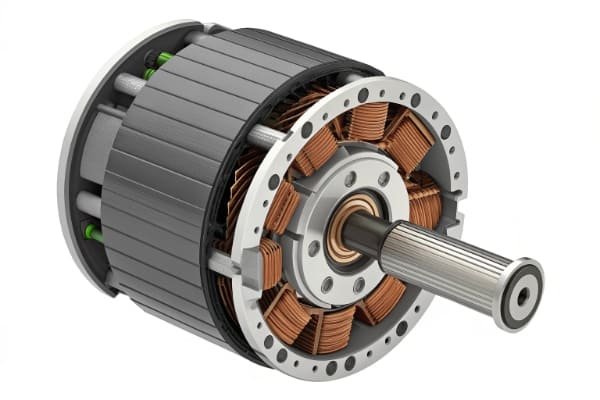
Motor Magnets: It's an HcJ-First World
I always tell my clients in the automotive and robotics industries: "Select HcJ-first, not Br-first. Keep ≥20% thermal margin against the worst-case rotor temperature." In a motor, heat and opposing magnetic fields are constant threats. The magnet's ability to resist demagnetization ([coercivity](https://en.wikipedia.org/wiki/Coercivity)6) is far more important than its maximum magnetic field (remanence).
Arc-shaped or segmented magnets are used in rotors to create a smooth, efficient magnetic field. For high-speed motors, these magnets must be mechanically secured. A thin retaining sleeve, made of materials like stainless steel or carbon fiber, is placed around the rotor to counteract the immense centrifugal forces that would otherwise cause the magnets to fly apart. In some high-efficiency applications, we even use laminated magnets—thin, insulated layers of magnet material bonded together—to reduce eddy current losses, which themselves generate more heat.
Early engineering confirmation of these details is crucial. A mistake here can lead to months of redesign.
Submit your operating temperature and dimensions — get a grade recommendation in 24h.
Why Do Wireless Charging Magnets Fail in Humid or Hot Conditions?
Your wireless charger has a weak magnetic grip and gets alarmingly hot. This common failure ruins the user experience and is often caused by a cascade of issues starting with the magnet selection5.
Wireless charging magnets typically fail for three reasons: 1) Poor alignment between the device and charger, which reduces charging efficiency and creates localized hot spots; 2) The adhesive11 and magnet coating break down under humid heat, allowing corrosion; 3) The thin magnet's low working point makes it vulnerable to irreversible demagnetization from the heat.
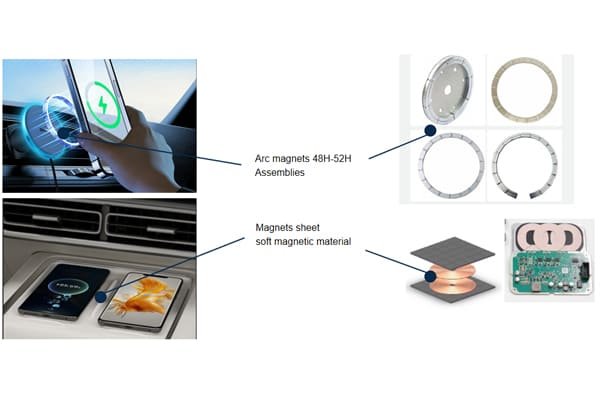
Engineering a Reliable Charging Experience
For clients like Reza who use our magnets in their wireless charging products, reliability is everything. Alignment and coating integrity dominate efficiency and longevity. The heat generated during charging is a magnet killer, especially for the thin magnet arrays used in these devices.
Here are the engineering solutions we implement:
- Combat Heat: We specify high-
[coercivity](https://en.wikipedia.org/wiki/Coercivity)6[NdFeB grade](https://en.wikipedia.org/wiki/Neodymium_magnet)10s like SH or UH. This ensures the magnets retain their strength even when the charger heats up during use. - Prevent Corrosion: For humid environments, a standard NiCuNi coating isn't enough. We recommend a dual-layer NiCuNi + Epoxy coating or a high-performance Parylene coating, which acts as a superior moisture barrier.
- Ensure Adhesion: The adhesive11 used to bond the magnet to the housing is critical. We advise clients to specify an adhesive11 with a glass transition temperature (Tg) at least 20°C higher than the application's maximum temperature to prevent it from failing.
- Control Tolerances: Using precise jigs during assembly ensures perfect alignment, maximizing charging efficiency and minimizing heat generation.
By addressing these system-level issues, we prevent field failures and ensure a reliable, safe product.
Submit your operating temperature and dimensions — get a grade recommendation in 24h.
How Do You Ensure Magnet Longevity in Harsh Industrial Environments?
Your magnetic separator or sensor is failing prematurely due to rust and impacts. In an industrial setting, this means unplanned downtime, which costs far more than the magnet itself.
For harsh [industrial magnets](https://en.wikipedia.org/wiki/Ferrite_(magnet))12, prioritize robustness. Often, inherently corrosion-resistant materials like Ferrite13 or Samarium Cobalt (SmCo)14 are a safer and more cost-effective choice than NdFeB. If you need the high strength of NdFeB, it must be protected with full encapsulation or a stainless steel jacket.
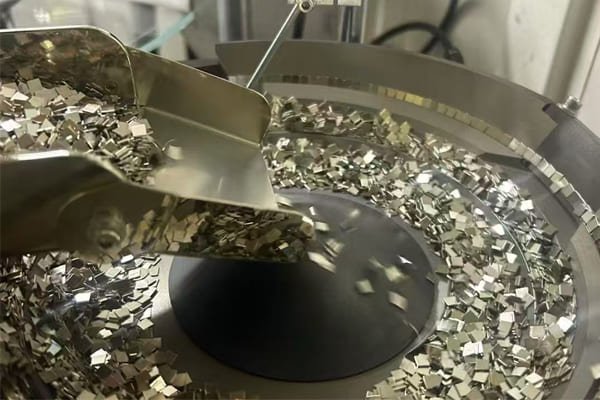
Choosing the Right Material for the Job
I always remind clients that unplanned downtime costs more than magnets. The goal is maximum reliability. While NdFeB is the strongest, it's also the most vulnerable in industrial settings where chemical fumes, moisture, and physical impacts are common.
Here’s a quick guide to choosing the right magnet type for industrial applications:
| Application | Recommended Magnet Type | Key Risk & Mitigation |
|---|---|---|
| High-Temp Motor (150°C+) | Samarium Cobalt (SmCo)14 | Risk: Brittleness. Mitigation: Handle with care during assembly; SmCo is more fragile than NdFeB but offers superior thermal stability and corrosion resistance. |
| Corrosive Conveyor | Ferrite13 (Ceramic) | Risk: Lower Strength. Mitigation: Use a larger magnet volume to compensate. Ferrite13 is low-cost and virtually immune to corrosion and demagnetization from heat. |
| High-Strength Fixture | Encapsulated NdFeB | Risk: Corrosion & Impact. Mitigation: Fully encase the NdFeB magnet in a welded stainless steel housing to protect it from both physical damage and environmental attack. |
Thinking about the magnet as part of a larger mechanical system is the key to longevity.
Submit your operating temperature and dimensions — get a grade recommendation in 24h.
Conclusion
Magnets don't lose strength in a vacuum; they fail in real-world applications. By prioritizing thermal margins, choosing the right material for the environment, and validating your design, you can engineer a reliable product.
Further Reading & Resources
<br>
| Resource | Description | Call to Action |
|---|---|---|
| NdFeB Grades Explained | A comprehensive chart detailing the magnetic properties and temperature ratings of all major NdFeB grade10s. | View Grade Chart |
| Temperature vs. Magnet Strength | A deep dive into how temperature affects coercivity6 and how to read a demagnetization curve8 to ensure stability. | Read the Guide |
| Magnet Coating Selection | A visual guide to choosing the right coating—from NiCuNi to Parylene—to protect your magnet from corrosion. | Read the Guide |
Understanding these domains is crucial for grasping how magnets function and why they can lose strength. ↩
Discover the science behind opposing magnetic fields and their impact on magnet performance. ↩
Understanding the effects of shock can help in designing more robust magnetic applications. ↩
Explore how different environments can lead to magnet degradation and how to prevent it. ↩
Proper magnet selection is key to ensuring reliability in your projects. ↩
Coercivity is a critical property that determines a magnet's ability to resist demagnetization. ↩
Learn about testing methods that ensure magnets can withstand temperature variations. ↩
Understanding this curve is essential for predicting magnet performance under stress. ↩
This testing method helps assess the corrosion resistance of magnets in harsh environments. ↩
Explore the various grades of NdFeB magnets and their suitability for different applications. ↩
The right adhesive is crucial for ensuring the longevity and performance of magnets in devices. ↩
Learn how to maximize the performance and longevity of magnets in industrial settings. ↩
Ferrite magnets offer unique benefits, especially in corrosive environments. ↩
SmCo magnets are known for their high performance in extreme conditions. ↩